Statutory Committee
Institutional Committee
- Students counsellor committee
- Anti – discrimination committee
- Committee for SC/ST
- Gender sensitization committee
- Grievance redressal committee
- Prevention of sexual harassment
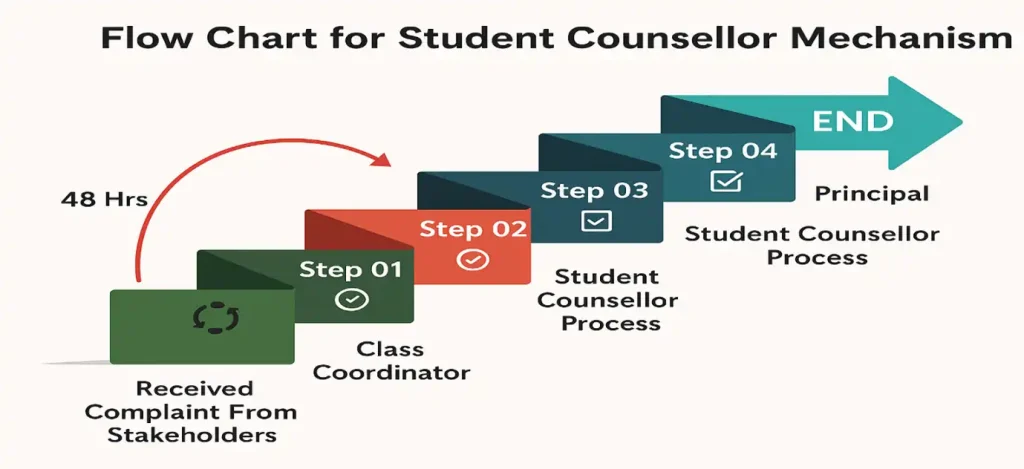
Students counsellor committee
Sr. No | Name of Person | Designation | Position | Contact No |
1 | Physician | Counsellor | Chairman | |
2 | Dr. Manoj V Girase | Professor | Member | 9822779910 |
3 | Dr. Kapil M Agrawal | Professor | Member | 797448512 |
4 | Mr.Ashwinkumar A Torne | Assistant Professor | Member | 9403860349 |
5 | Mr. Sachin D Patil | Assistant Professor | Member | 7972861860 |
Mechanism
Anti – discrimination committee
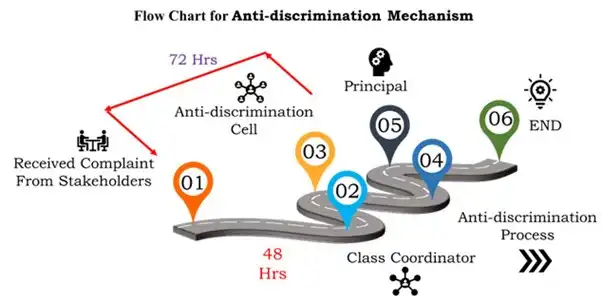
By outlawing it and offering preventative and protective measures to help eradicate it, as well as sanctions for those who engage in any kind of harassment or discrimination, the Cell will eradicate all types of harassment and discrimination against any individual.
Constitution
Sr. No | Name of Person | Designation | Position | Contact No |
1 | Dr. Nitin G Haswani | Principal | Chairman | 9822887144 |
2 | Dr.Pritam S Jain | Professor | Member | 7620227021 |
3 | Mr.Kamlesh D Mali | Assistant Professor | Member | 9156161111 |
4 | Mr. Pritam I Pawara | Assistant Professor | Member | 8390888554 |
5 | Mr. Akshay P Sanklecha | Assistant Professor | Member | 7744958597 |
Objectives of the Anti-Discrimination Cell
- C. Patel Institute of Pharmacy, Shirpur has constituted the Anti-Discrimination Cell in compliance to the UGC regulations (Promotion of Equity in Higher Educational Institutions), with the following members:
- The relevant issues (if any) of denying a student, staff member, or group of pupils because to their caste, creed, language, ethnicity, gender, or ability will be handled by this cell.
- This cell constantly works to preserve the honor of the school by resolving any issues raised in the notice on equity in the provision or receipt of education on campus.
- This cell ensures an environment conducive to the academic growth of university members. This cell safeguards people’s rights while they are learning on campus, regardless of their appearance or way of life.
- The Cell will eradicate all types of harassment and discrimination against individuals by outlawing them, offering safeguards and preventative measures to help eradicate them, and punishing those who engage in these practices.
Role and Responsibilities:
- To receive any complaints from female employees and female students who have experienced sexual harassment;
- To maintain accurate and complete records of all complaints received;
- To investigate such complaints and ascertain the facts;
- To maintain a comprehensive process document detailing the procedures followed and, in such a case, the settlement research in resolving the issue..
Mechanism:
Committee For SC / ST
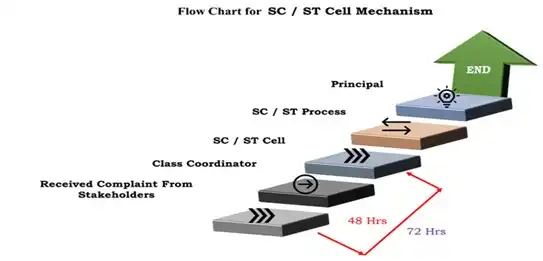
Establishment of Committee for SC/ ST (As per the Scheduled Castes and the Scheduled Tribes (Prevention of Atrocities) Act, 1989, No. 33 OF 1989, dated11.09.1989).
Constitution
Sr. No | Name of Person | Designation | Position | Contact No |
1 | Dr. Nitin G Haswani | Principal | Chairman | 9822887144 |
2 | Dr.Pankajkumar G Jain | Professor | Member | 9823668845 |
3 | Mr.Pradeep S Patil | Associate Professor | Member | 8149142956 |
4 | Dr. Rahul H Pawara | Associate Professor | Member | 9764432174 |
5 | Mr. Atul P Patil | Associate Professor | Member | 9923555635 |
6 | Mr. Yuvraj S Pawara | Associate Professor | Member | 9673424791 |
7 | Mr.Amol P Patil | Lab Assistant | Member | 9011203133 |
Duties/Responsibilities / Activities of the committee
To address to the issues related to the students belong to SC & ST category
Objectives
- Resolve the grievances/problems of students of SC & ST category
- Awareness of students regarding government policies, various scheme run by the State & Central Government.
- To avoid any caste discrepancies in the campus
Functions
- To adhere to and put into practice the policies and different programs that the State and Central Governments administer in order to assist the students in their respective categories.
- To establish a calm and healthful atmosphere for students from different backgrounds.
Mechanism:
Gender Sensitization Cell
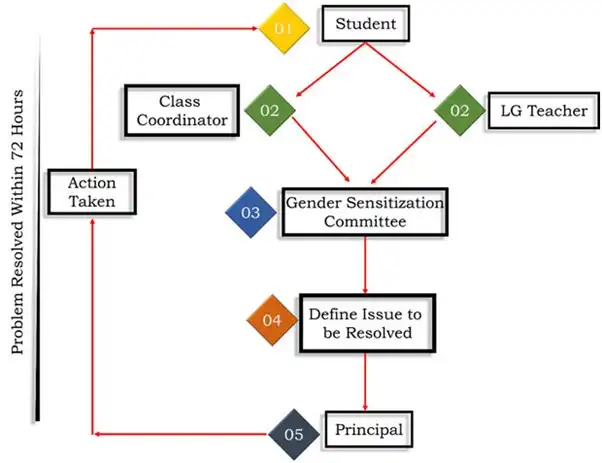
In order to eradicate gender prejudice and insensitivity, the Gender Sensitization Cell has been directed to disseminate the message of gender equality through seminars, poster displays, exhibits, and other means. The Cell has also been primarily tasked with investigating and taking necessary punishment against those responsible for harassment and atrocities against female instructors, staff, and female students. The organization is equipped to manage and address gender-sensitive issues and offer a setting where men and women may collaborate with respect and personal safety. The cell focuses on raising awareness of gender problems and fostering an atmosphere that supports gender justice.
Constitution
Sr. No | Name of Person | Designation | Position | Contact No |
1 | Dr. Nitin G Haswani | Principal | Chairman | 9822887144 |
2 | Dr.Monika B Ola | Professor | Member | 8275102108 |
3 | Mrs. Manjushri P Dabhade | Associate Professor | Member | 8446492842 |
4 | Dr. Amod S Patil | Associate Professor | Member | 9921646411 |
5 | Mr. Vilas R Jagatap | Associate Professor | Member | 9930581845 |
6 | Mr.Yogesh A Sonar | Associate Professor | Member | 8149760600 |
Main objective of Gender Sensitization cell is:
- To in still good ideals that uphold the rights of females and make young boys and girls gender aware.
- To give the peer group general direction for integrating/mainstreaming gender in all of the institution’s activities, such as debates, poster-making contests, and targeted group discussions.
- To offer a comprehensive and multidisciplinary method for comprehending how gender is socially and culturally constructed to influence how men and women perceive society.
- To raise awareness of equality in the legal system, society, and democratic processes.
- Student Gender Champions will be chosen by faculty members assigned from each department who have been assigned as nodal instructors in this cell.
Role and Responsibilities:
- To review all grievance letters from female employees or students about sexual harassment;
- to review and look into each complaint from female employees or students by gathering the necessary information from relevant parties.
Mechanism
Institutional Committee
- Students counsellor committee
- Anti – discrimination committee
- Committee for SC/ST
- Gender sensitization committee
- Grievance redressal committee
- Prevention of sexual harassment
Students counsellor committee
Sr. No | Name of Person | Designation | Position | Contact No |
1 | Physician | Counsellor | Chairman |
|
2 | Dr. Manoj V Girase | Professor | Member | 9822779910 |
3 | Dr. Kapil M Agrawal | Professor | Member | 797448512 |
4 | Mr.Ashwinkumar A Torne | Assistant Professor | Member | 9403860349 |
5 | Mr. Sachin D Patil | Assistant Professor | Member | 7972861860 |
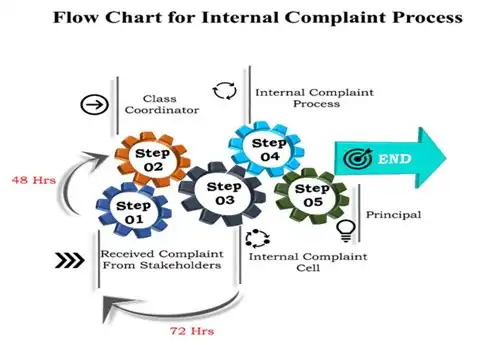
Mechanism
Grievance Redressal Committee
In order to ensure transparency by Technical Institutions imparting technical education, in admissions and with Para amount Objectives of preventing unfair practices and to provide a mechanism to students for redressal of their grievances, AICTE has notified regulation for establishment of mechanism for Grievances Redressal Committee the AICTE approved technical Institution.
Constitution
Sr. No | Name of Person | Designation | Position | Contact No |
1 | Dr. Nitin G Haswani | Principal | Chairman | 9822887144 |
2 | Mr. Ujwal N Katolkar | Associate Professor | Member | 9673664414 |
3 | Mr. Sughosh V Upasani | Associate Professor | Member | 9403384014 |
4 | Mr. Ghanshyam A Girnar | Associate Professor | Member | 8600118404 |
5 | Mrs.Sangita V Badgujar | Assistant Professor | Member | 9423981022 |
6 | Mr. Harshal P Patil | Non-Teaching | Member | 7498617804 |
Grievance may be due to following reasons
- Admission process
- Academic
- Non-Academic
- Grievance related to charging of fees
- Grievance regarding conducting of Examinations
- Harassment by colleague students or the teachers etc.
Role and Responsibilities:
- To look into the complaints lodged by any student, and judge its merit.
- To look into matters of harassment.
The committee members are selected form the teaching staff members and with the regular meeting held the following procedure is framed.
The committee will keep an eye on the admissions process, standard academic procedures, and matters pertaining to finances.
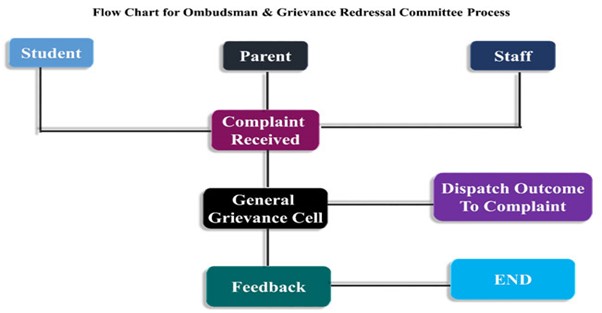
- The student will inform any committee member of their grievance in a written letter.
- Following that, the member who has been made aware of the issue shall report to the whole committee.
- All committee members will gather for a meeting to discuss the reported problem.
Mechanism:
ABOUT PLACEMENT CELL
Introduction
To assist students in selecting a suitable career path and enhancing their employability skills, the institution maintains a fully functional Training and Placement Cell. The Training & Placement Cell prepares students to begin their careers with the top company and satisfy industry standards. A committed group of faculty members and placement officers work in the institution’s placement cell to provide internships, final placements, soft skill training, and aptitude training. The team engages in a variety of activities with the goal of achieving maximum placement and works throughout the year to better position all of the students in their areas of interest.
It gives pupils a chance to succeed and get recognition.
Objectives
- Reach out to corporations and start-ups in various industries to take advantage of possibilities.
- Keep up a database of businesses and create useful connections for hiring on campus.
- Establish relationships, work together, and schedule meetings with TPOs and the HR department.
- Keep up business ties with recruiters, both current and prospective, and help them reach their employment objectives.
- Foster industry trust and confidence in R. C. Patel Institute of Pharmacy, Shirpur
- By holding simulated placement drives for the batch of students, you can help them acquire the information and skill sets needed for placements.
- Through engagement and frequent industry visits, adjust to the current market conditions.
- Invite experts with highly sought-after positions in the field to provide guest lectures.
Placement Committee
Sr. No | Name of Person | Designation | Position |
1 | Dr. Nitin G Haswani | Principal | Chairman |
2 | Mrs.Sheetal Mahale | Assistant Professor | Training & Placement Officer |
3 | Dr. Pritam S Jain | Professor | Member |
4 | Dr. Kapil M Agrawal | Associate Professor | Member |
5 | Dr. Pankaj G Jain | Associate Professor | Member |
6 | Dr. Monika Ola | Associate Professor |
Why to recruit from RCPIOP?
Here are the answers to some of the questions you might ask us before deciding to visit R. C. Patel Institute of Pharmacy, Shirpur
1. Do you have sound management behind the institution?
2. What is the standard of your college in comparison with top colleges in the country?
RCPIOP, Shirpur is been established to impart education to rural students and develop them to be assets for the industry, which will eventually contribute to the growth of the nation. The R. C. Patel Institute of Pharmacy, Shirpur was established in 2019 with aim to spread Pharmacy education to deserving students and thereby render social services. This centrally located college has emerged as center of academic excellence in the field of Pharmacy within a short span. The state of the art infrastructure, competent and professional staff members, which synergize to extend competitive advantage to students. More than 50% of the faculty holds a Ph.D. degree and have industry experience too. The college provides an open platform to the students to nurture and hone their academic skills, inculcate research trends and contribute to societal activities within their academic career.
3. What is the infrastructure and teaching faculty in the college?
The college is equipped with well-developed infrastructure that supports academic excellence and holistic learning. It includes spacious classrooms with modern teaching aids, well-equipped laboratories, a central library with digital resources, seminar halls, computer centres, and high-speed internet connectivity. The teaching faculty consists of highly qualified, experienced, and dedicated academicians who emphasize conceptual clarity, practical exposure, research orientation, and student mentoring.
4. What are the value additions to the students?
The college provides several value-added initiatives to enhance students’ employability and overall development. These include soft-skill and communication training, personality development programs, aptitude and logical reasoning sessions, industry-oriented workshops, certification courses, guest lectures by industry experts, internships, and career guidance programs. Regular seminars, industrial visits, and hands-on training help students gain practical knowledge and industry exposure.
4. Do you have facilities
- Well-Equipped Library: Central library with a wide collection of textbooks, reference books, journals, e-resources, and digital databases.
- Laboratory Facilities: Modern, well-maintained laboratories with updated equipment to support practical learning and research.
- Computer & Internet Facility: Computer centers with high-speed internet and Wi-Fi connectivity across the campus.
- Seminar & Conference Halls: Spacious seminar halls with audio-visual aids for workshops, seminars, and placement activities.
- Training & Skill Development Center: Facilities for aptitude training, soft skills, communication skills, and personality development programs.
- Hostel Facility: Separate and secure hostel accommodation for boys and girls with basic amenities.
- Sports & Recreation: Indoor and outdoor sports facilities to promote physical fitness and overall well-being.
- Cafeteria: Hygienic cafeteria providing healthy and affordable food options.
- Medical Facility: First-aid and basic healthcare support available on campus.
- Transportation Facility: College buses and easy access to public transport for students and staff.
- Career Guidance & Counseling: Support for career planning, higher studies guidance, and competitive exam preparation.
5. Do you have facilities for conducting campus recruitment?
The college has well-established facilities for conducting campus recruitment drives. A dedicated placement cell coordinates with recruiting organizations and provides fully equipped seminar halls and classrooms for pre-placement talks, written tests, group discussions, and interviews. The campus also offers audio-visual support, internet connectivity, and administrative assistance to ensure a smooth and effective recruitment process.
5. Where is your college located?
The college is located in a well-connected and accessible area with convenient transportation facilities. Its location provides a peaceful academic environment while being easily reachable by road and public transport.
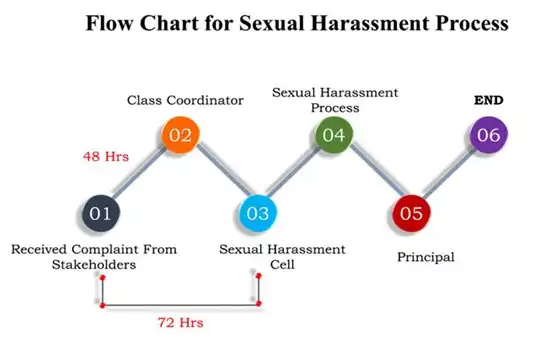
Prevention of Sexual Harassment
The Ministry of Law & Justice has passed the Act on 22nd April 2013. The Rules were passed on 9th December 2013.The Act in its Section 2n, defines sexual harassment. Sexual harassment includes anyone or more of the following unwelcome acts or behaviour (whether directly or by implication), namely
- Physical contact and advances, or
- A demand or request for sexual favours, or
- Making sexually coloured remarks, or
- Showing pornography, or
- Any other unwelcome physical, verbal, non verbal conduct of sexual nature
Section 3 (2) of the Act further elaborates that if any of the following circumstances occurs or is present in relation to or connected with any act or behavior of sexual harassment among other circumstances, it may amount to sexual harassment-
A promise of preferential treatment at work, an implied or explicit threat of unfavorable treatment at work, a threat regarding her current or future employment status, interference with her work or the creation of a hostile, offensive, or intimidating work environment for her, or humiliating treatment that could endanger her health or safety.
Constitution
Prevention of sexual harassment of women at institute committee
Sr. No | Name of Person | Designation | Position | Contact No |
1 | Dr. Nitin G Haswani | Principal | Chairman | 9822887144 |
2 | Dr.Monika B Ola | Professor | Member | 8275102108 |
3 | Mrs.Sangita V Badgujar | Associate Professor | Member | 9423981022 |
4 | Mrs.Pooja A Mundada | Associate Professor | Member | 7841849225 |
5 | Ms. Dhanashri shinde | Student | Member | 9322766345 |
6 | Ms. Urvashi Beldar | Student | Member | 9552203759 |
Anti-Sexual Harassment Squad
Sr. No | Name of Person | Designation | Position | Contact No |
1 | Dr. Nitin G Haswani | Principal | Chairman | 9822887144 |
2 | Dr.Monika B Ola | Professor | Member | 8275102108 |
3 | Mrs. Manjushri P Dabhade | Associate Professor | Member | 8446492842 |
4 | Mrs. Amrapali J Mhaiskar | Associate Professor | Member | 9766923395 |
5 | Mrs. Rupali B Shimpi | Assistant Professor | Member | 8600484503 |
6 | Ms. Dipshri D Malkhede | Assistant Professor | Member | 9420943351 |
7 | Mrs. Patil B Harshada | Assistant Professor | Member | 8390193551 |
8 | Mrs.Madhuri M Patil | Non-Teaching | Member | 9420387998 |
Duties/Responsibilities/ Activities of the committee
- To address to the issues related to the sexual harassment and victimization of students & employee.
- Discussion on policy making/ Framing.
Women and female students are employed in a variety of roles inside the college. They must labor in a secure and protected setting with dignity. The RCPIOP Women’s Grievance Cell was established and is now working toward this goal.
Objectives
- A secure and safe atmosphere for female faculty members and students
- Address the complaints and issues of female staff members and students.
- Counselling for female students; raising awareness of female staff members and students through seminars, conferences, etc.
Functions
- To take appropriate measures, as outlined below, to shield female students from any kind of harassment, including sexual and psychological harassment.
- If necessary, to provide the inquiry committee’s report to the chairperson.
- To arrange seminars, workshops, and guest lectures by specialists in a range of women’s-related professions, including attorneys, social activists, and health professionals.
The committee members are selected form the teaching/non-teaching staff members and with the regular meeting held the following procedure is framed.
- The victim will notify any member of the committee in writing of their grievance.
- Following that, the member who has been made aware of the issue shall report to the whole committee.
- All committee members will gather for a meeting to discuss the reported problem.
- The committee members will then call the victim and the suspect, and each party will hear a detailed account of the case individually.
- After that, a meeting will be scheduled to address the issues from both parties’ perspectives in order to take appropriate action.
- Members will determine whether or not the victim or suspect requires counselling. if found guilty, a written letter will be taken from the person who is proved guilty saying that what he have committed.
- The convicted person’s family will be contacted to talk about their concerns.
Before administering any penalty, the student’s family will be consulted. The committee members will not disclose the problems or the identities of the victims or suspects to third parties.
Mechanism